

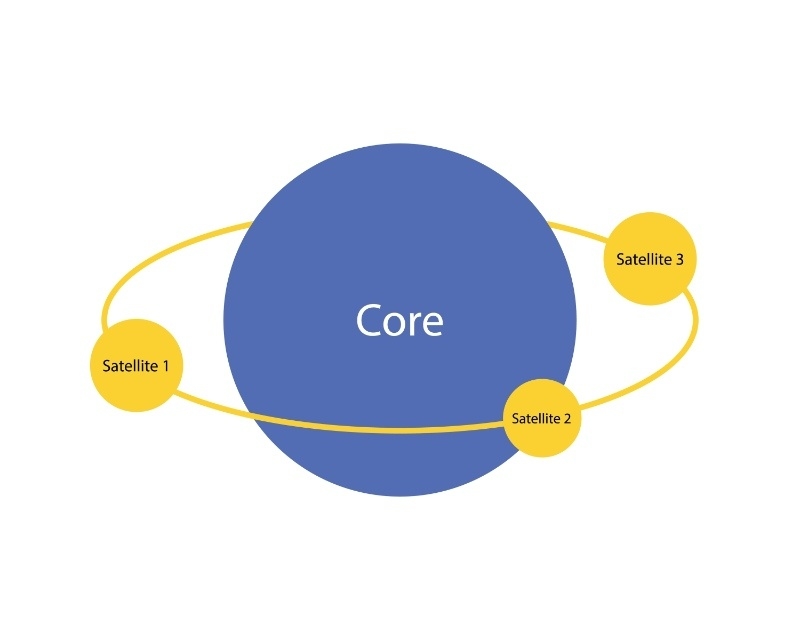
Investing can feel really scary. You have to think about risk and how much money you can make. The core-satellite investing strategy can help with that. This way of investing gives you a base and also lets you try to make more money. It works for beginners and experienced investors.
Understanding it can make investment choices easier and help you perform better in the long run. You mix investments with ones that could make more money. This way, your investments can change with the market. The core-satellite strategy helps you make choices. It is good for people who want to invest their money. Investing with a core-satellite strategy can help your money grow over time.
The core-satellite investing strategy is a way to manage your investments. It splits your investments into two parts:
The core part usually consists of index funds or diversified assets that track the market. Satellite investments might have stocks from sectors, new markets, or investments with a theme. This setup helps investors get performance and still take advantage of market chances, with core investments and satellite investments. The core-satellite investing strategy helps you balance stability and growth with core investments and satellite investments. It is also important to have a basic level of understanding of stocks and bonds before investing a fortune.
A core-satellite portfolio helps balance risk and reward in a way. Here is how it works:
By combining stability and growth, this investment strategy helps investors get results. These strategies have benefits for investors. Here are a few:
The strategy offers an investment approach. It helps investors achieve their goals. The main investments provide stability. The other investments provide growth. This balance helps investors.
Examples of core-satellite portfolio structures are really helpful for understanding this concept. Core-satellite portfolio examples can make things clearer. These core-satellite portfolio examples show us how we can make the strategy work for people with different risk levels and financial goals. Here are some core-satellite portfolio examples to help make things clearer:
Creating your own portfolio involves expertise, holistic knowledge, and the art of making one. This structured approach ensures your investments remain aligned with your objectives. Additionally, a strong portfolio has a diverse base, which is crucial in a standout portfolio. Here are a few key steps for building a core-satellite portfolio:
You need to think about what you want to achieve with your money. Are you trying to save for retirement, build up your wealth over time, or make some money in the short term? You have to decide whether your goal is retirement savings, wealth building, or short-term gains.
Select a low-cost index. Diversified assets that match your goals. You should pick investments that fit what you want to achieve. Look for low-cost index funds. They can be a choice. You can choose diversified assets. These can help spread out your risk. Make sure they align with your goals.
We should think about putting our money into things that might be a bit riskier. The money we could get back might be a lot higher. This is because higher-risk assets have the potential for returns. So we are talking about higher-risk assets that have the potential for returns.
You should review your portfolio regularly and adjust its investments when needed. Check your portfolio regularly to make sure everything is okay, and make adjustments to the investments if needed. This will help you with your investments in the run.
To keep your portfolio in shape, you need to avoid some common mistakes as an investor. This strategy really works. Investors need to watch out for a few things:
The core-satellite investing strategy is a choice for many investors. People new to investing can use the core-satellite investing strategy to build a foundation while they learn about the markets. The core-satellite investing strategy is also useful for investors because it allows them to use the satellite portion to try new ideas without putting their entire portfolio at risk. The core-satellite investing strategy is an option for people who want to invest in a way that is organized yet allows some flexibility.
The core-satellite investing strategy balances safety and growth. You can do this by having a core and adding satellite investments around it. This way, you can build a portfolio that can withstand market changes and not lose much money.
If you want to make investment choices, you should learn about the core-satellite approach to investing and how to build a core-satellite portfolio. You can also look at examples of core-satellite portfolios for ideas. If you plan carefully and are patient, the core-satellite investing strategy can help you do well with your money in the long term and feel good about your financial situation.
Yes, it is a strategy for beginners. It gives them a base with core investments. At the time, it allows them to try higher-risk opportunities, but not too many. This balance helps new investors learn and grow. They can do it without taking many market risks. The core investments provide a foundation. Beginners can then slowly get into investments.
Most experts say you should look at your investments and make changes every six to twelve months. This helps keep your investments in line with what you want to achieve and how much risk you are willing to take. It is especially important to do this after the market has gone up or down a lot because this can change how much of your money is in each type of investment.
Mutual funds can be used for a part of your investments and for a smaller part, too. For the part index, mutual funds are a good choice. For the part, you can use mutual funds that are managed by people or that focus on specific areas like technology or healthcare to try to get better returns and have a mix of different mutual funds in your portfolio. Mutual funds are useful for both the large and the smaller parts of your investments.
This content was created by AI